


AI for SEO: A Simple Guide to Automating Your Rankings Workflow

AI for SEO: A Simple Guide to Automating Your Rankings Workflow
AI is quietly rewriting how SEO works. Tasks that used to take hours, keyword research, content briefs, outlines, even full blog drafts can now be done in minutes.
If you run a blog, manage an e‑commerce store, or handle SEO for clients, this is good news. You can spend less time doing repetitive work and more time on strategy and results.
In this guide, we'll walk through AI for SEO in simple language, show where it fits in your workflow, and explain how to use it the smart way, without risking your rankings.
What Is AI for SEO ?
AI for SEO simply means using artificial intelligence tools to help you:
- Find the right topics and keywords
- Plan and write SEO‑optimized content
- Improve on‑page SEO (titles, headings, internal links)
- Analyze results and suggest improvements
Instead of you doing everything manually, AI tools:
- Read huge amounts of data (search results, competitor pages, keywords)
- Look for patterns (what ranks, what users search, what content wins)
- Turn those patterns into suggestions or even ready‑to‑publish content
You are still in control. AI doesn’t replace you; it gives you superpowers and saves you a lot of time.
Why AI Matters for Modern SEO
Search engines like Google now look for much more than keyword stuffing. They try to understand user intent and content quality.
AI is actually built for this kind of work. It can:
- Understand natural language (how people actually talk and search)
- Spot topics and angles you might miss
- Suggest structures that match what Google already rewards
Key Benefits of AI in SEO
-
Speed
- Turn a seed keyword into 50 topic ideas in seconds
- Generate outlines in a few clicks
- Draft long‑form posts in minutes instead of days
-
Consistency
- Keep a consistent tone and structure across posts
- Follow SEO best practices every time (headings, meta, internal links)
-
Scalability
- Run multi‑site blogging without burning out
- Cover more topics and long‑tail keywords
-
Data‑driven decisions
- Base your content on real SERP data, not guesses
- Use AI to analyze competitors and find gaps
Where AI Fits in Your SEO Workflow (Step by Step)
Think of your SEO process as a pipeline:
- Research
- Planning
- Writing
- Optimization
- Publishing
- Tracking and improvement
AI can help at each step.
1. Keyword and Topic Research
AI tools can:
-
Turn a simple idea like
running shoesinto:- "best running shoes for beginners"
- "how to choose running shoes for flat feet"
- "running shoes vs training shoes"
-
Group keywords into logical clusters
-
Suggest search intent (informational, transactional, etc.)
A simple prompt example:
"Give me 20 blog post ideas about eco-friendly skincare for an online store.
Group them by category and mark each as informational or transactional."
2. Content Briefs and Outlines
Before writing, you can ask AI to:
- Analyze top‑ranking pages
- Suggest headings (H2/H3)
- List key points to cover
- Recommend word count and FAQs
This reduces the risk of missing important angles that Google already expects on the page.
3. Drafting SEO‑Optimized Content
AI writing tools can create first drafts that are:
- Structured with headings
- Keyword‑aware (not stuffed)
- Easy to scan
Your job moves from "writer from scratch" to editor and strategist.
You can use prompts like:
"Write a 1500-word blog post for beginners about 'how to start a dropshipping store'.
Use simple language, include H2 and H3 headings, and add a short FAQ at the end.
Optimize for the keyword 'start a dropshipping store' without overusing it."
4. On‑Page SEO Optimization
AI can help you:
- Write better title tags and meta descriptions
- Improve intro paragraphs to match search intent
- Suggest internal links to related posts
- Spot missing sections compared to top competitors
For example:
"Suggest 5 SEO-friendly title tags under 60 characters for this post:
[Paste your intro paragraph here]"
5. Multi‑Site Publishing and Automation
If you manage several blogs, posting manually to WordPress, Webflow, or Shopify becomes a time sink.
AI‑powered platforms can:
- Store your content calendar
- Generate and edit drafts
- Push posts directly to your CMS
- Keep formatting consistent everywhere
This is where content automation really shines for busy marketers and business owners.
6. Performance Tracking and Iteration
AI can also:
- Read data from Google Search Console and Analytics
- Spot pages with falling traffic
- Suggest what to update (headlines, sections, FAQs)
You get targeted, practical ideas instead of staring at dashboards all day.
Smart Use Cases: How AI Actually Helps Your SEO
Here are concrete ways to plug AI into your daily work.
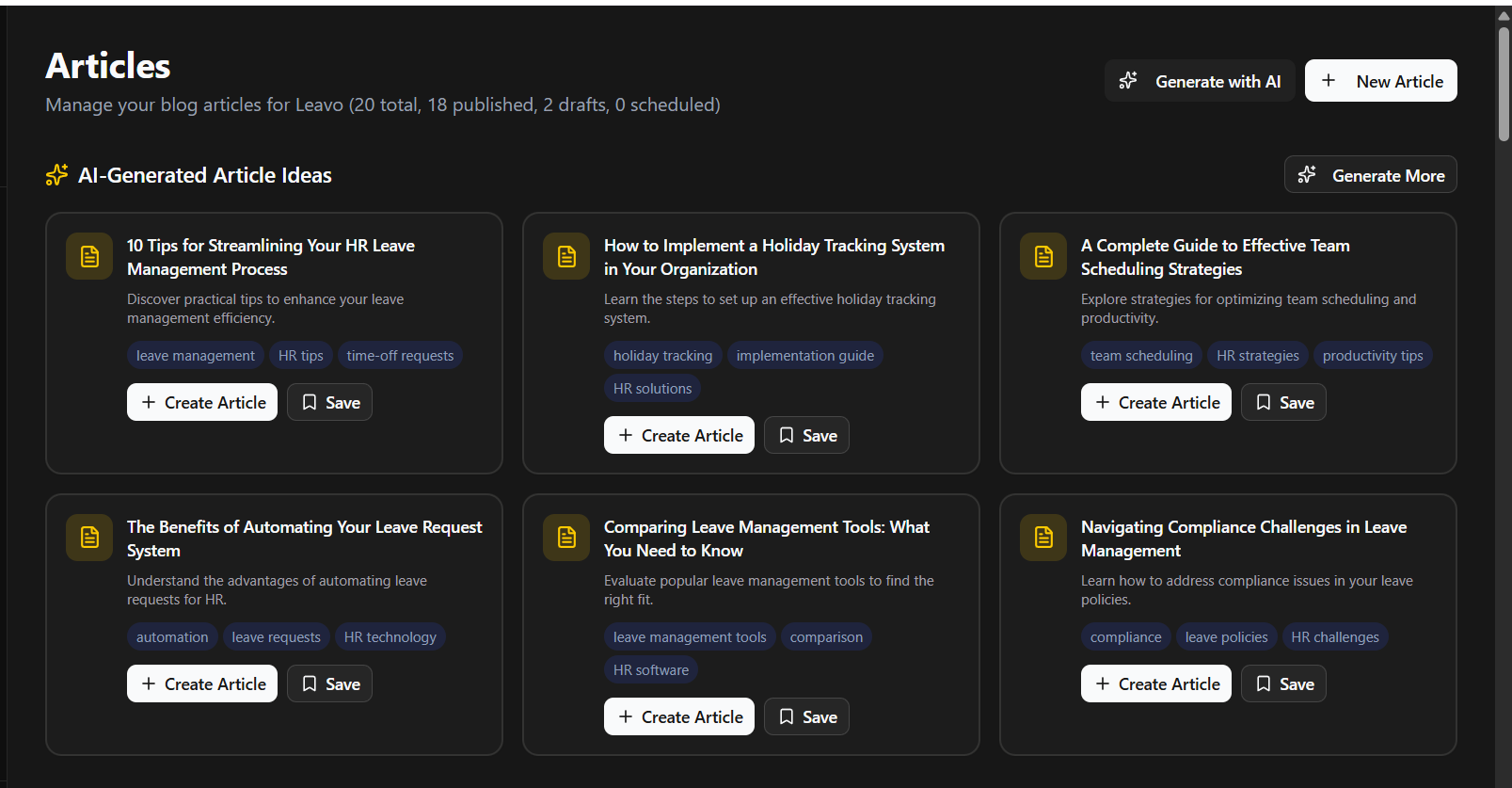
1. Building a Topic Cluster in a Week
Manual way:
- Research keywords and topics individually
- Plan pillar pages and supporting posts
- Write everything one by one
AI‑assisted way:
- Ask AI to propose a topic cluster around one main keyword
- Get suggested pillar and cluster topics
- Auto‑generate briefs and first drafts for each post
- Edit and polish, then publish on a schedule
2. Turning Product Data into SEO Content
If you run an online store (Shopify, WooCommerce, etc.), you likely have:
- Product specs
- Features
- A few short bullet points
AI can turn this into:
- Unique product descriptions
- Comparison articles
- Buying guides
All aligned with SEO‑optimized keywords and structured for users who are ready to buy.
3. Updating Old, Underperforming Posts
Instead of rewriting from scratch, let AI:
- Summarize what’s already on the page
- Compare it with today’s search results
- Suggest new sections and FAQs
- Rewrite weak paragraphs in clear, modern language
You end up with stronger, fresher content in a fraction of the time.
Common Mistakes to Avoid with AI SEO
AI is powerful, but it’s not magic. Used badly, it can hurt your site.
Here’s what to watch out for:
-
Publishing raw AI drafts without editing
- Risk: low quality, wrong facts, generic content
- Fix: always review, fact‑check, and add your own expertise
-
Ignoring search intent
- Risk: writing "what is" content when users want "how to buy"
- Fix: check top results first and match their intent
-
Keyword stuffing because it "looks SEO"
- Risk: worse user experience and lower rankings
- Fix: ask AI to keep density natural, then read it aloud yourself
-
Using the same template everywhere
- Risk: your site feels robotic
- Fix: mix formats : guides, checklists, FAQs, case studies
-
Forgetting your brand voice
- Risk: bland content no one remembers
- Fix: train your AI prompts with examples of your tone and style
How to Start Using AI for SEO Safely
You don’t need to flip your whole process overnight. Start small.
Step 1: Pick One Use Case
For example:
- AI for keyword ideas
- AI for outlines only
- AI for first drafts of low‑risk posts (not your most important pages)
Step 2: Create a Simple Prompt Library
Save prompts that work well, such as:
"Create a detailed blog outline about [topic] for beginners.
Include H2 and H3 headings and suggest 5 related keywords."
"Rewrite this paragraph in a simpler, friendlier tone while keeping the same meaning:
[Paste paragraph]"
Step 3: Build an Edit‑First Mindset
Treat AI content like a junior writer’s draft:
- Keep what’s good
- Fix what’s weak
- Add your own examples and opinions
Step 4: Gradually Automate More Steps
Once you’re comfortable, you can:
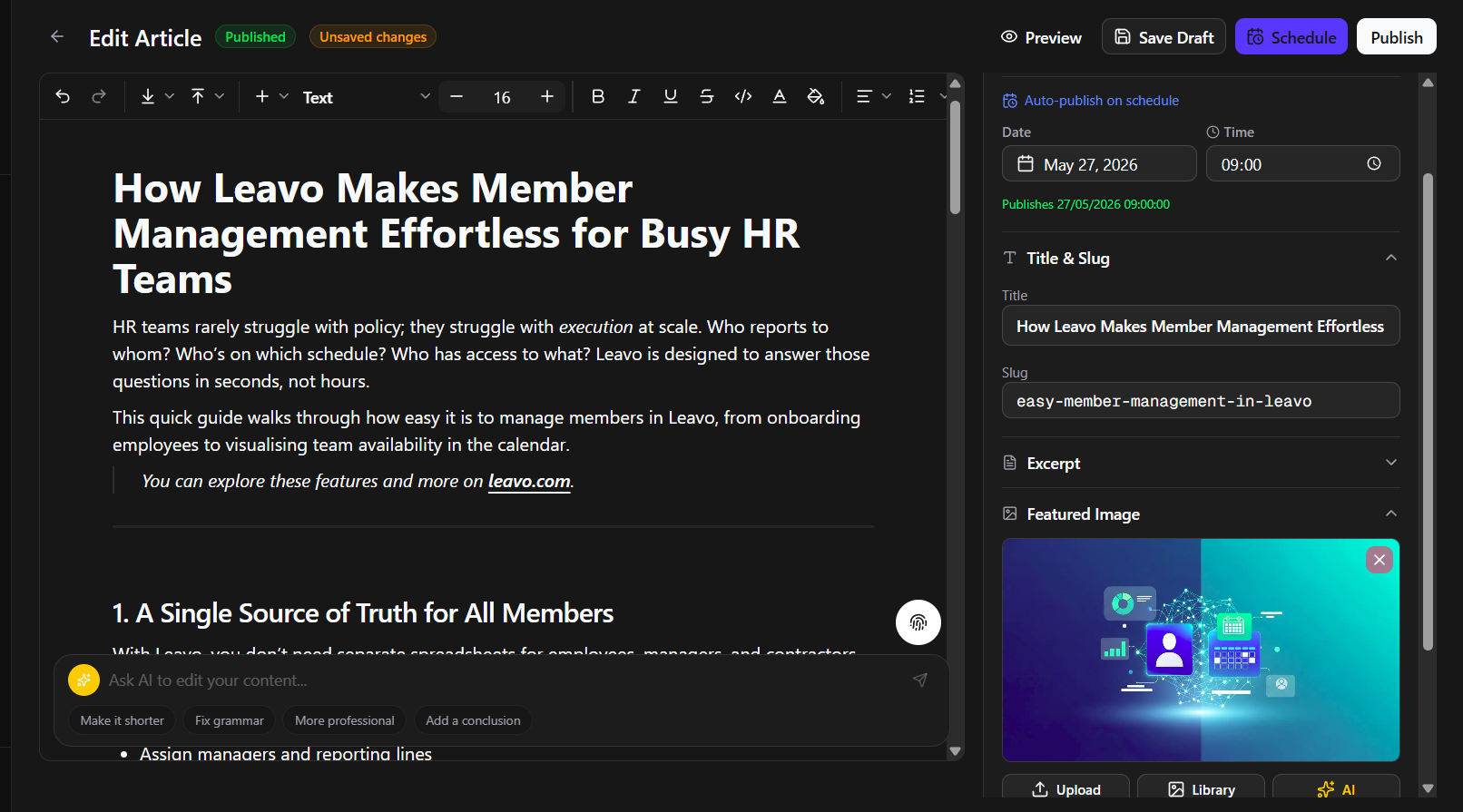
- Automate full content pipelines (idea → draft → edit → publish)
- Connect your AI tools to your CMS for faster publishing
- Use AI recommendations to plan your whole content calendar
Future Trends: Where AI SEO Is Heading
AI and SEO are moving fast. Over the next few years, expect:
- More search features powered by AI (like Google’s AI Overviews)
- Greater focus on experience and authority, Google wants to know who is behind content
- Better tools for multi‑site management, where one platform helps you run many blogs at once
- Stronger penalties for spammy AI content, pushing everyone toward higher quality
This means:
- AI will keep doing the heavy lifting
- Human editors will focus more on insight, strategy, and lived experience
How RankBolt Fits into Your AI SEO Stack
If you want to put all of this into practice without stitching together 10 different tools, platforms like RankBolt can help. Instead of juggling separate apps for research, writing, and posting, RankBolt focuses on AI‑powered, SEO‑optimized blog publishing across systems like WordPress, Webflow, and Shopify. You can plan topics, generate and edit AI drafts, and push them live, all from one place, while the platform helps you follow SEO best practices and grow organic traffic on autopilot.
:::cta
Turn AI SEO Theory into Automated Blog Growth with RankBolt
RankBolt turns AI-powered SEO content into a simple, automated workflow — so your blog keeps publishing while you focus on strategy.
It connects research, writing, optimization, and publishing into one streamlined system across WordPress, Webflow, Shopify, and more.
AI-powered, SEO-optimized blog publishing without the busywork.