


A 5-Minute Website SEO Audit You Can Actually Finish

A 5-Minute Website SEO Audit You Can Actually Finish
Most SEO audits die in a spreadsheet. They’re huge, vague, and nobody ever implements them.
Here’s a different approach: a tight, 30‑minute audit that only checks what actually moves rankings and content performance, and that you can plug straight into your content automation stack with tools like RankBolt.
Step 1: Check your SEO health at a glance (5 minutes)
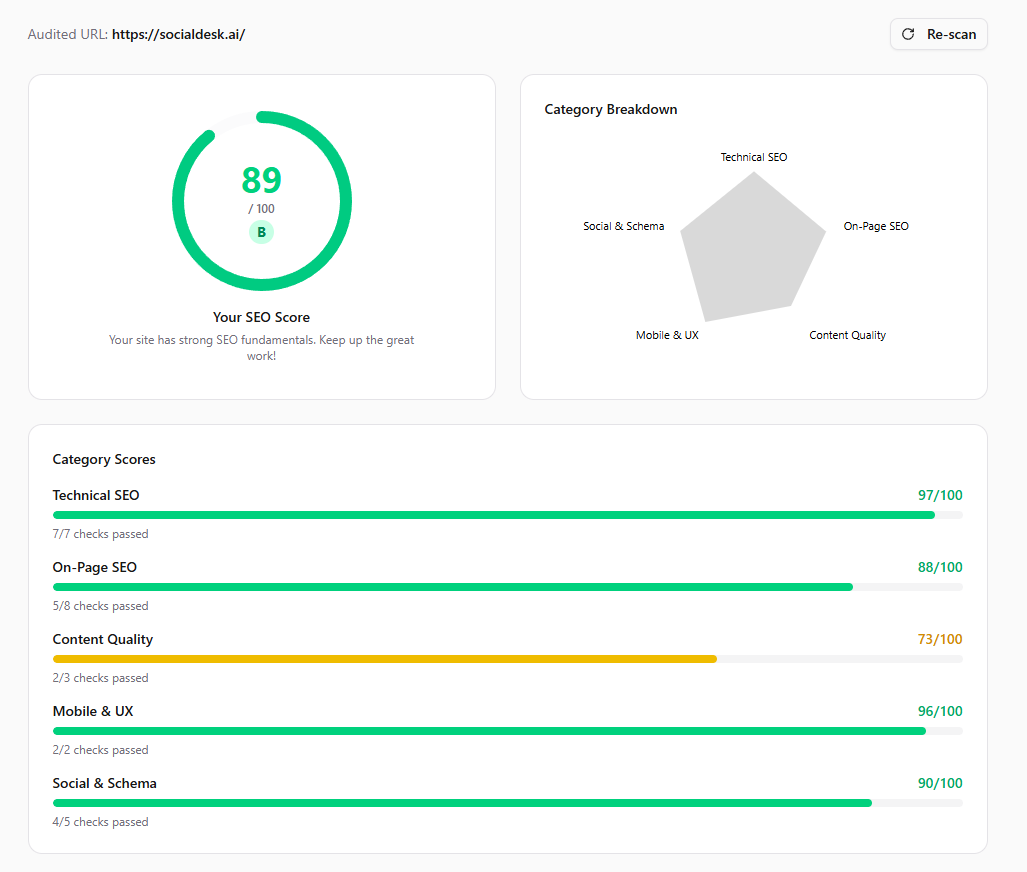
Start with an overview so you know whether you’re dealing with a minor tune‑up or a burning building.
- Use your favorite SEO tool to get a domain health score and see total organic clicks for the last 3–6 months.
- Note any big traffic drops that line up with Google updates.
- List your top 5 landing pages by organic traffic.
These pages are your control group: if you improve them, you’ll see impact fastest.
Step 2: Fix obvious technical friction (10 minutes)
You’re not doing a full technical deep‑dive here. You’re hunting for quick wins.
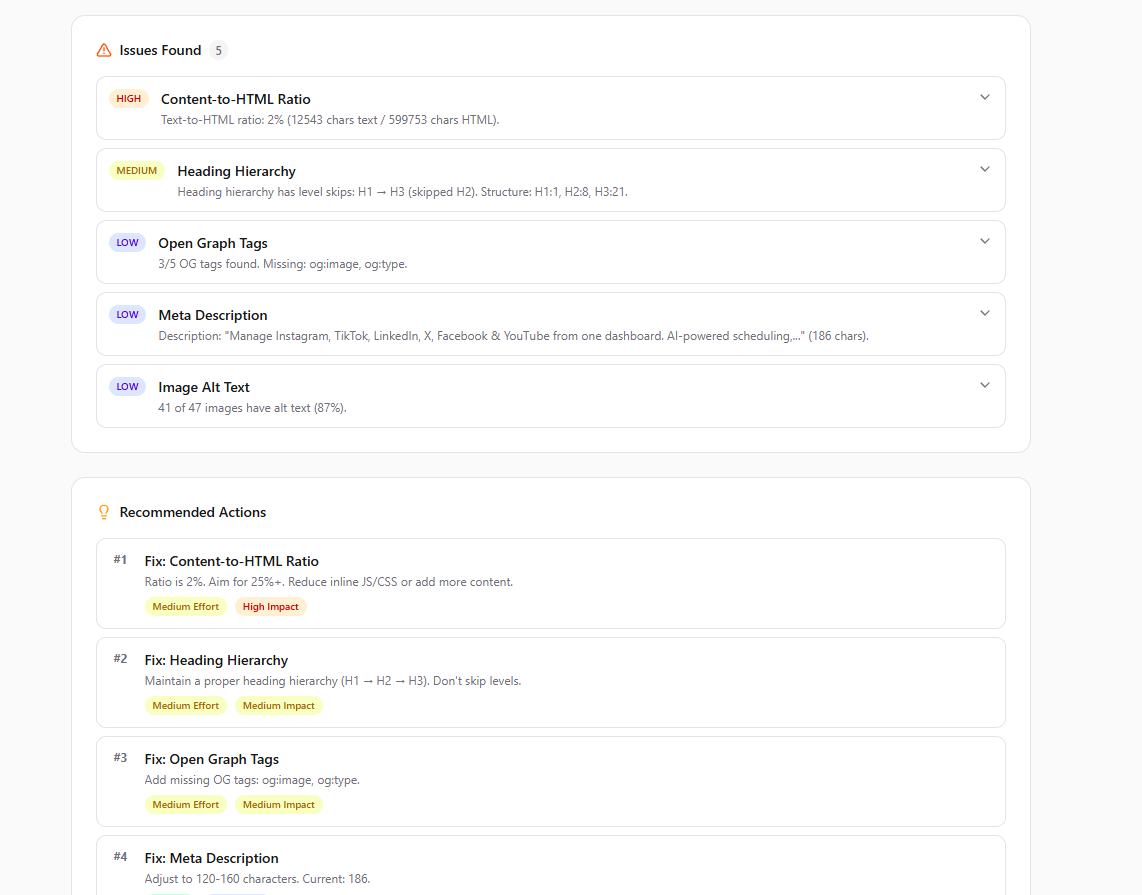
- Run a site speed test (e.g., PageSpeed Insights) on one top traffic page and one template page (blog post, product page, etc.).
- Check for mobile usability issues: tiny fonts, broken buttons, layout shifts.
- Scan for indexing problems: pages accidentally set to
noindex, blocked by robots, or duplicated with different parameters.
If you see recurring issues across multiple URLs, that’s a task for your dev team, not a one‑off fix.
Step 3: Audit 3 key pages like Google does (10 minutes)
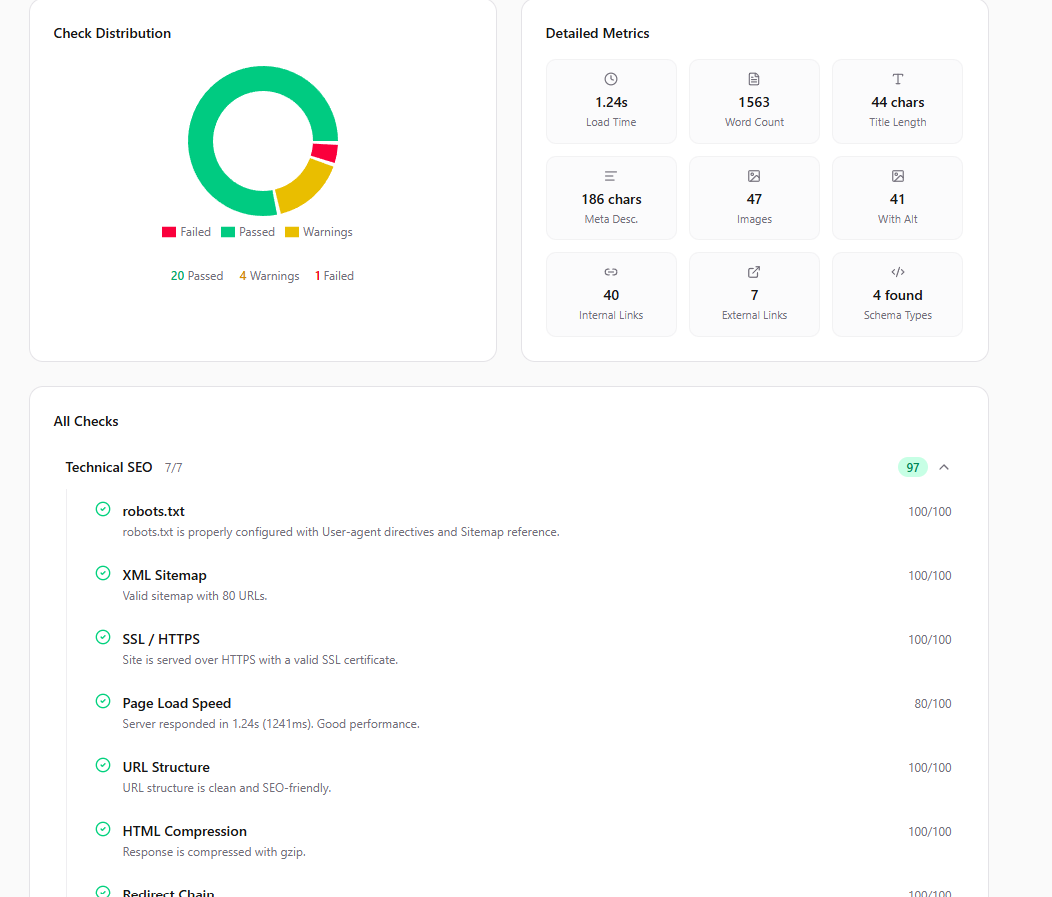
Pick 3 high‑intent URLs (for many sites: homepage, one product/service page, one blog article). Then check:
- Title & H1 clarity: Does the keyword show up naturally? Would a stranger instantly know what the page is about?
- Search intent match: If this page ranked #1, would it actually answer the query better than competitors?
- Internal links: Are you sending readers toward related products, categories, or deeper content?
You don’t need perfection. You’re looking for mismatches, like a transactional keyword landing on a fluffy blog post.
Step 4: Turn findings into an SEO content plan (5 minutes)
Now convert your notes into content tasks your future self will actually do.
-
For every weak page, write one fix: better title, stronger intro, more internal links, clearer offer.
-
Add these as items to your RankBolt Content Calendar, grouped by theme (e.g., product pages, how‑to posts).
-
Use the RankBolt AI Blog Generator to draft:
- Updated blog posts that better match search intent
- Supporting articles that internal‑link into key money pages
Because RankBolt connects directly to WordPress, Shopify, and Webflow, you can queue updates and new articles on autopilot instead of letting your audit rot in a doc.
Step 5: Set a simple follow‑up rule
An audit only matters if you check back.
- Re‑run this mini‑audit every 4–6 weeks.
- Track just three numbers: organic clicks, impressions, and how many prioritized fixes you shipped.
If those ship numbers go up, the traffic almost always follows.